# Carbon Footprint Tracking Software: Key to a Sustainable Future
In today's world, climate change and environmental sustainability are at the core of both the global economy and individual responsibilities. Businesses, public institutions, and even individuals face increasing pressure and awareness to reduce their environmental impact and manage their carbon footprints. This is precisely where **carbon footprint tracking software** comes into play, offering an efficient, transparent, and measurable roadmap for sustainability. In this blog post, we will explore the core components of these vital tools, their technological innovations, and how they play a critical role in your business's green transformation journey.
Data Collection and Integration Methodologies
Effective carbon footprint tracking begins with accurate and comprehensive data collection. Modern software utilizes various methods to automate and simplify this process:
* **IoT Devices and Sensors:** Data such as energy consumption (electricity, gas, water), fuel usage, and waste quantities can be collected in real-time through smart sensors and IoT (Internet of Things) devices. This minimizes errors introduced by manual data entry and provides instant monitoring capabilities. * **ERP/CRM System Integrations:** Integrations with your business's existing Enterprise Resource Planning (ERP) or Customer Relationship Management (CRM) systems ensure a seamless flow of purchasing, supply chain, logistics, and operational data. This allows for a more holistic analysis of emission sources. * **API Integrations and Cloud Solutions:** APIs (Application Programming Interfaces) are used to retrieve information from various data sources (energy providers, transportation platforms, carbon offsetting projects, etc.). Cloud-based software stores this data in a secure and scalable environment, facilitating access from locations worldwide. Microservices architectures and Rust-based backends, in particular, can enhance the performance and reliability of these integrations.
Carbon Footprint Calculation Algorithms and Reporting
Transforming collected data into meaningful insights requires advanced calculation algorithms and flexible reporting tools.
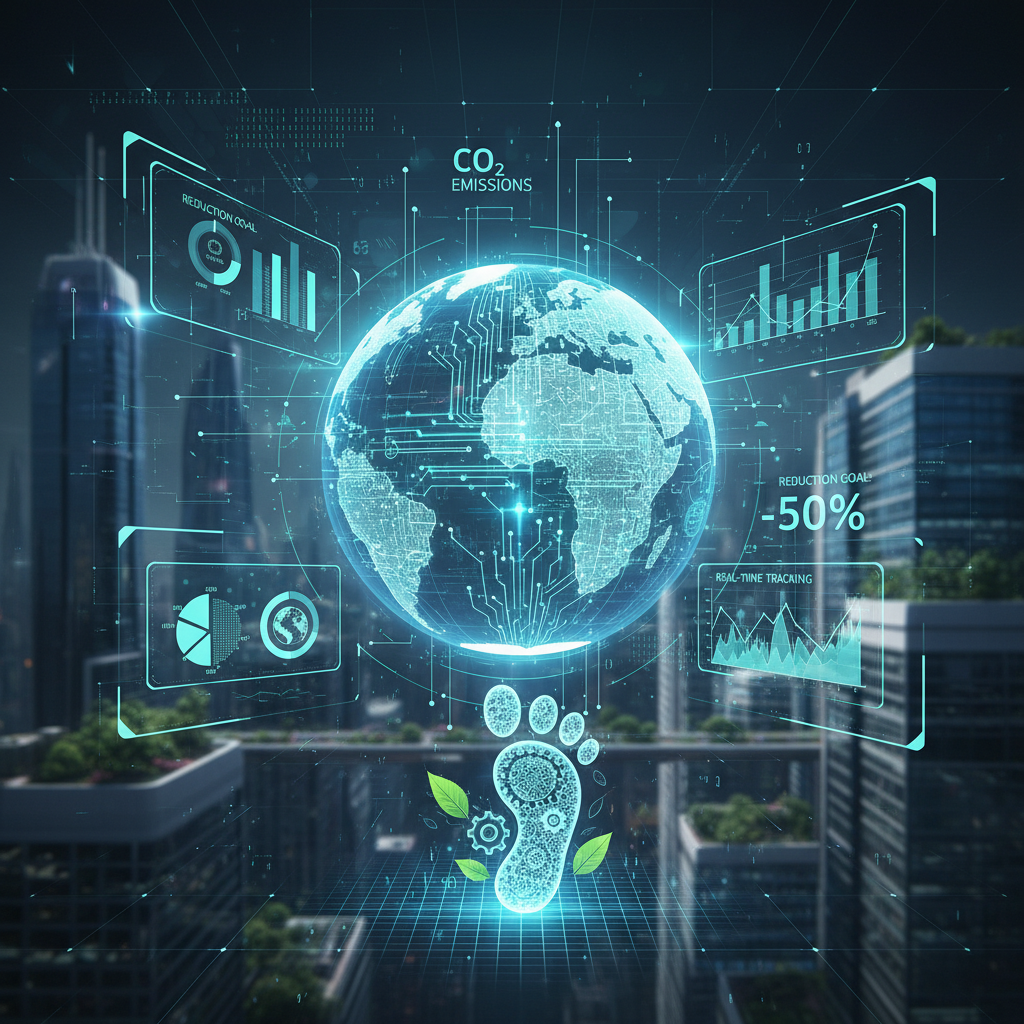
* **Standards-Compliant Calculations:** Software typically calculates carbon emissions using emission factors and methodologies compliant with international standards such as the GHG Protocol (Greenhouse Gas Protocol) and ISO 14064. This ensures that your reports are globally recognized. * **Machine Learning for Prediction and Optimization:** AI-powered algorithms can predict future emission trends based on historical data and suggest optimized strategies to achieve carbon reduction targets. This enables proactive sustainability management. * **Visual and Customizable Reporting:** Through user-friendly interfaces (developed with modern frameworks like React or Flutter), companies can easily visualize carbon footprint data, generate detailed reports, and present them to stakeholders. These reports clearly show the percentage of goal achievement, the highest emission sources, and reduction opportunities.
Advanced Tracking Systems with AI and Blockchain
Sustainability software becomes significantly more powerful when combined with cutting-edge technologies.
* **Artificial Intelligence (AI)-Powered Analysis:** AI analyzes large datasets to identify patterns and anomalies that might be overlooked by the human eye. For example, it can pinpoint sudden increases in energy consumption or inefficiencies, and even auto-generate drafts of complex sustainability reports through natural language processing (NLP) capabilities via Large Language Models (LLMs). * **Transparency and Security with Blockchain:** Blockchain technology ensures that carbon data throughout the supply chain is recorded in a transparent, immutable, and secure manner. Every transaction (e.g., from raw material procurement to final product delivery) is timestamped and verifiable on the blockchain. This prevents "greenwashing" claims and offers complete trust to stakeholders. Smart contracts written with Solidity can trigger automated payments or certifications when specific carbon reduction targets are met.
Example Scenario: A Simple Carbon Emission Calculation Function
The following Python code can be used to simply calculate carbon emissions resulting from a company's electricity consumption. This could be a fundamental part of a more complex carbon footprint software.
def calculate_electricity_carbon(kwh, emission_factor_kg_co2_per_kwh=0.45):
    """
    Calculates CO2 emissions from electricity consumption.

    Arguments:
    kwh (float): Amount of electricity consumed (kilowatt-hours).
    emission_factor_kg_co2_per_kwh (float): Average CO2 emission factor per kilowatt-hour (e.g., 0.45 kg CO2/kWh globally).

    Returns:
    float: Total CO2 emissions (kg).
    """
    return kwh * emission_factor_kg_co2_per_kwh
# Example usage: Assume a business's monthly electricity consumption is 1500 kWh. monthly_electricity_kwh = 1500 carbon_emissions_kg = calculate_electricity_carbon(monthly_electricity_kwh)
print(f"Carbon emissions from monthly electricity consumption: {carbon_emissions_kg:.2f} kg CO2")
# Another scenario: When the company switches to renewable energy, reducing the emission factor.
carbon_emissions_new_scenario_kg = calculate_electricity_carbon(monthly_electricity_kwh, emission_factor_kg_co2_per_kwh=0.1)
print(f"Carbon emissions after switching to renewable energy: {carbon_emissions_new_scenario_kg:.2f} kg CO2")
This example demonstrates how software can use specific data points to produce meaningful environmental outputs. Real-world systems operate with comprehensive algorithms and dynamic emission factors covering many more emission sources (fuel, travel, waste, supply chain, etc.).
Partner with Us on Your Sustainability Journey
Managing your carbon footprint and achieving your sustainability goals can be a complex process. Our expert team has over 10 years of experience in developing customized, integrated, and scalable carbon footprint tracking software for businesses, utilizing the latest technologies (Artificial Intelligence, Blockchain, Cloud-Based Solutions, React/Flutter-based user interfaces). We are here to build a sustainable future with you. Contact us to optimize your business's environmental impact and streamline your reporting processes!